Showing posts with label Florida friendly. Show all posts

Florida and Orchids Naturally Go Together


What is is about orchids that is so undeniably attractive?  Perhaps because their mystical presence has been part of nature since before man and they span all of the continents of the Earth except for Antarctica.  Science has shown that the Orchidaceae family of flowering plants may go back as far as 100 million years or more.  One orchid species that has been traced back to at least 60 million years, the dried seed pods of the Vanilla Orchid are the source of vanilla for baking and perfume!

How many types of orchids are there?  The Orchidaceae family of uniquely beautiful flowers has about 28,000 natural species: this equals the number of bony fishes and is more than twice the number of bird species, and about four times the number of mammal species on Earth. Since the introduction of tropical orchids into cultivation in the 19th century, horticulturists have produced more than 100,000 additional hybrids and cultivars.

Why do the flowers of the orchid last so long?  The complex mechanisms that orchids have evolved to achieve cross-pollination, which were once investigated by Charles Darwin himself, are highly specialized therefore the chances of being pollinated are often unlikely, so orchid flowers usually remain in bloom for very long periods.  You will find orchids in flower for months at a time, giving endless enjoyment.

What about orchids in Florida?  Our state is host to about half of the native orchid species found in the United States! Almost all orchid species will thrive in the climate and conditions of the Sunshine State because we are at a nexus of both temperate and semi-tropical to tropical regions.  Our native species of orchids include the fabled Ghost Orchid as well as four species that are so rare, they originate only in Florida.

What are the four main types of orchids?  Orchidaceae are broken down into Moth Orchids (Phalaenopsis), Dendrobium Orchids, Slipper Orchids (shown above), and Boat Orchids (Cymbidium).  All of these orchids can thrive in the right setting in and around your Florida home.   Phalaenopsis are the most common variety that you see sold just about everywhere including the local grocery store.  Dendrobrium have long narrow leaves and are often found decorating restaurant tables or garnishing elegant plates of food.  The rarely sold Lady Slipper orchid is pictured above and comes in many other colors.  Cymbidium orchids are large and tall with heavy, elaborate flowers.

How can orchids be incorporated into North Florida landscape design?  There are several ways to add orchids to your landscaping.  Because some species are air plants, they are often grown on trees as they would be found in nature.  Dendrobrium orchids are known to grow well in our soil and bloom once or twice per year.  Cymbidium and moth orchids enjoy the conditions of pots on outdoor patios and lanais.  

Form and Function: Landscaping for Privacy in Florida


Landscaping for privacy is one of the top reasons why a Florida landscape designer is called upon and we encourage the use of natural plantings to provide your own sanctuary. Landscaped privacy areas often look so much better than a fence, and often work better to distract from what you are hiding as opposed to drawing attention.


Reasons why you may need landscaping for privacy at your Florida home or business:

A small home site - Although easier to maintain, small yards bring your neighbors that much closer.

Noise reduction - If you live near a busy public area or road, this may be important to you.

An unattractive fence that borders your property - Double your privacy with a better looking screen of plantings.

Provide clear separation between yards - Property lines are not always obvious and landscaping can clarify borders.


Once your landscaping for privacy is planted, regular landscape maintenance is of the utmost importance to keep it doing its intended job.  Proper irrigation and fertilization is typically mandatory, and you also utilize the concepts of Florida friendly, waterwise, xeriscaped, and native landscape designs.  

Flower of September: Blanketflower Covers the Dunes with Wheels of Fire


We have selected the blanketflower, Gaillardia, as our Flower of September. You will see it blooming everywhere in North Florida, especially the colorful dunes of our beaches, well into the fall months. This native wildflower is also called firewheel, Indian blanket, Indian blanketflower, or sundance.

There is an abundance of subspecies of this flower but the one that grows the best in Flagler Beach, St. Augustine, Palm Coast, Daytona, and Ormond is Gaillardia pulchella.   This flower grows either as a short-lived perennial, annual flowering plant, or sometimes year round.  Blanketflower is a relative of the sunflower family.

Gaillardia pulchella is a hardy plant that will grow in almost any soil but it tends to appreciate soil that is sandy and well-drained. It thrives in our region in summer and fall because of its high drought tolerance and predilection for a dry, hot climate and full sun. It spreads beautifully (like a blanket) and you will see expansive patches of its bright fiery colors.

Blanketflower is loved by honeybees, butterflies, and caterpillars - in fact some species of caterpillar will eat only Gaillardia.  Blanketflower produces plentiful seeds for replanting and self-seeding, and the seed heads are very popular with wild birds.  If deer are damaging your landscaping, you will be pleased to note that blanketflower is deer-resistant!

🦚Article by Connie Helena, author of The Green Orchid ðŸ¦š


Flower of August: The Attraction of Firebush


This native plant blooms for months, attracting both birds and butterflies, and is practically bullet-proof once established. - University of Florida

The most common discussion in North Florida in August is typically regarding how HOT it is.  Our temperatures climb to the maximum and the sun demonstrates its power at midday.  Fragile flowers such as gardenia will not tolerate the extreme heat and vegetable gardens are taking a break until fall.  The agave (century plants) are blooming with their towering stalks of flowers, but one of our favorite summer plants is busy attracting birds and butterflies: the fiery firebush (also known as scarlet bush or hummingbird bush).

Firebush, Hamelia patens, is our ideal choice for August's Flower of the Month with its drought and heat tolerance, Florida friendly character, and ability to integrate beautifully into almost any landscape design for North Florida.  The flower shown in the photo is the dwarf variety of firebush, which is not native and is slightly lighter in color than the regular variety.  Native firebush grows very large in full sun and has shown tolerance to salt spray in beach landscaping designs.

The time to plant firebush is NOW so contact your North Florida landscaper to incorporate it into your landscape design.  It thrives in almost any type of soil and is mostly disease and pest resistant.  It will begin its red orange blooms in spring then continue all the way until the first cold freeze.  Firebush is considered a perennial or semi-woody shrub and the best thing about it is the wildlife it attracts: hummingbirds and butterflies such as the gulf fritillary and the magical zebra longwing. Its berries will attract other birds as well.

🦚Article by Connie Helena, author of The Green Orchid ðŸ¦š


Flower of June: Passionate about Passionflower


What is the vine with the exotic purple flowers that pops up in the North Florida area in the summer months? It is no other than the stunning plant Passiflora, also called passionflower or maypop. Passiflora incarnata is the most common species in the southeast but you will most likely encounter other examples of this plant, with varieties in the many hundreds.

Passionflower when used in landscape design looks best in natural and informal plantings, as its vines tend to go where they please and are typically deciduous as opposed to evergreen. It is especially valued in butterfly gardens, as it is the food plant of many different types of Florida caterpillars. Passionflower is a fast growing perennial that can grow as high at 12 feet!

The unique purple flowers of passionflower are about three inches in diameter and each blossom only lasts 24 hours.  Our local passionflower vines, considered a wildflower, have hardy roots through very cold weather and their fruits are edible, although so popular with wildlife you will rarely get a chance to see them ripen to the orange color they attain in the late summer and fall before they are eaten.  

Passionflower is the food of a number of butterfly species, including the zebra longwing and Gulf fritillary. Bumblebees are known to become intoxicated from the nectar of passionflower (look closely at the photo at the top), and will stay on the blooms all day long, sometimes falling to the ground in a stupor.

The fruit was a favorite of colonial settlers of the South and Native Americans alike; the Cherokee called it "ocoee" and some people still know it as wild apricot.  To this day eating passionfruit is a favorite of Cajuns: they call the plant liane de grenade, or "pomegranate vine".

Native Americans taught European colonists to utilize leaves of passionflower to make a calming medicinal tea, and it is still used this way in some Central and South American cultures. There are studies currently being done to investigate whether passionflower leaf extract is a better alternative to anxiety medications than the current pharmaceutical treatment.

And finally - why is this lovely flower named for "passion"?  The label refers to the passion of Jesus in Christian history: in the 15th and 16th centuries, Spanish missionaries chose the physical structures of this flower, especially the numbers of its various parts, as symbols of their faith.  You may notice the passionflower sometimes appearing as a decorative element in Christian artworks over the centuries since.

Passionflower will always be found in areas with lots of available sunlight, never in shady areas beneath a forest canopy. Other species you could likely encounter in North and Central Florida include the Passiflora racemosa, a large evergreen vine with long clusters of bright red passionflowers, about five inches each in diameter. Also growing in gardens and forests of Palm Coast, St. Augustine, and Ormond Beach is the blue passionflower, Passiflora caerulea.

🦚Article by Connie Helena, author of The Green Orchid ðŸ¦š

Flower of April: Soap Aloe is in Exotic Bloom


This month we have aloes flowering in Flagler, St. Johns, and Volusia Counties' landscape designs, especially the Florida friendly aloe maculata that many mistakenly identify as aloe vera.  These red/orange flowers we are enjoying in North Florida are also called zebra aloe, aloe saponaria, or most commonly soap aloe because the plant is used to make soap in its native Africa.

At current count there are over 500 species of aloe and soap aloe is one beautiful species uniquely set apart because of its fat, thick leaves and exotic looking spikes of orange or red flowers in the spring.  This plant is waterwise and tolerant of just about any soil, making it a home run for landscape designs in Palm Coast, Ormond Beach, and the surrounding areas.

Warm desert regions enjoy the beauty of soap aloe and it will also be seen in Arizona and California landscaping.  Along with being drought tolerant and therefore xeriscape friendly, soap aloe is a rock star in beach landscape design because it is so salt tolerant.  You just can't go wrong with this stunning plant if you enjoy the look of an exotic species, but with low maintenance needs.

We can assist you with all aspects of beach-beautiful landscaping: design, installation, and maintenance are the services we offer, with specialties like water features and outdoor lighting also in our realm of expertise.  Oceanside landscape designs are a challenge that very few professional companies are prepared to meet, and we do it with years of experience and a trusted reputation behind every beachfront property.

🦚Article by Connie Helena, author of The Green Orchid ðŸ¦š


What It Means to Manage a Landscape


A landscaper is a company that not just designs and installs landscaping for residential and commercial properties, but one that goes beyond just maintenance to management of the landscape design.  They follow strict guidelines so you can have peace of mind:

Mowing

Mowing frequency is customized based on the different growth rates of the seasons.  Certain grasses will be mowed more than others: for example, St. Augustine turf will be cut up to 44 times per year and Bahia turf will be cut up to 21 times per year.

Rotary mowers will be used and the blades will be kept sharp and maintained so grass is not torn.  Height of grass will be determined for optimal health of lawn.

Mowing patterns will ensure an even distribution of clippings for appearance and protection, and clippings will remain on turf to restore nutrients for a healthy lawn.

Edging and Trimming

Plant beds, curbs, roadways, driveways, trees, and buildings will be neatly edged and trimmed to maintain a desirable shape.

After edging and trimming, walkways and patios will be cleared to maintain a clean, well-groomed appearance.

Edging and trimming will coincide with mowing and areas inaccessible to mowers will be maintained with other equipment.

All debris created by our company will be promptly removed.

Fertilization and Control of Weeds, Insects, and Disease

Various percentages of nitrogen, phosphorus, and potassium will be determined based on different seasons and environmental conditions.  St. Augustine turf will be fertilized four times per year.

Soil tests will be performed once per year to evaluate pH and nutrient content.

It is the sole responsibility of our company to treat for insects, disease, or weeds.

All state and federal regulations will be strictly followed when applying pesticide or herbicide products.  These treatments will be performed by trained technicians only.

🦚Article by Connie Helena, author of The Green Orchid ðŸ¦š


The truth about Amaryllis flowers

In the early spring of northeast Florida we begin to see signs of what many of us call the Amaryllis flower - a tall spike of large showy flowers emanating from a bulb in the ground.  In cooler parts of the country these bulbs are grown in pots indoors and are sold around the holidays.  Our climate enables us to put these beauties in our landscaping and enjoy their return each year, as well as their thriving propagation.

What may surprise you is that this flower is not an Amaryllis at all, but rather a Hippeastrum, according to botanists who have been divided on the issue for centuries!  A true Amaryllis is a South African bulb related to the Hippeastrum, a flower which originates in South America.  The decision was made official in 1987 but that has not changed the common (incorrect) classification.

Other facts of note regarding the Hippeastrum:

1) It includes about 90 species and 600 plus hybrids and cultivars.
2) Some Hippeastrum have evergreen leaves and some deciduous (seasonal).
3) This flower usually has six petals, three on the outside and three inside.
4) Depending on the species, there may be two or as many as 15 flowers on one stem.
5) Some varieties of Hippeastrum are air plants, which is why the bulbs need exposure to air.
6) The plants can be food sources for butterfly and moth larva.
7) Hippeastrum is Greek for "knight's star", most likely a reference to the morning star weapon.
8) These bulbs do not respond well to frost or too much watering.
9) The first commercial growers of Hippeastrum were the 18th Century Dutch.
10) There are five types of flowers: single, double, miniature, cybister, and trumpet.

🦚Article by Connie Helena, author of The Green Orchid ðŸ¦š

Century Plant and Agave in the Florida Landscape Design

Newcomers to northeast Florida are often captivated by the site of the gigantic century plants thriving so impressively in landscape designs from St. Augustine to Ormond Beach. Also known as maguey or American aloe (although not in the aloe family), century plant (Agave americana) actually only lives to be 10-30 years. This waterwise ornamental plant has a large dramatic form when fully grown and is prized for modernist, desert-style landscape designs, as well as being perfectly suited for Florida-friendly xeriscaping.

The spreading rosette shape of century plant can grow as wide as 13 feet and its leaves can be almost seven feet long.  Each leaf tip is extremely sharp and can pierce skin, so do not plant this drought tolerant beauty anywhere near a childrens' play area!  Alternatively, century plants can be cultivated along a perimeter as a natural fence to keep people or animals in or out of a designated zone.  The two most commonly encountered Agaves are the blue straight leaved type and the variegated curly leaved species.  If you are drawn to more exotic varieties, landscapers can help you incorporate them into your landscape design for St. Augustine, Palm Coast, and Ormond Beach.    

These succulents will bloom only once, their unique flowers growing many feet in the air on stalks, and after they bloom they will die.  So enjoy this amazing plant for as long as it lives! Various Agaves are used to produce tequila, mezcal, and pulque in Mexico, as well as agave nectar, a healthy and natural alternative to sugar.  The fibers from certain century plants are also used in Mexican crafts and textiles. 

Amazing Facts About the Live Oak Tree

The majestic live oak tree (Quercus virginiana) is one of the world's most eye catching and fascinating species of tree and it is located throughout the southern United States including Sanford, Deltona, DeBary, Daytona Beach, Port Orange, Lake Helen, Orange City, DeLand, and Ormond Beach, Florida. If you have one of these incredible species in your landscape design already, you most likely have an appreciation for its visual impact as well as its maintenance challenges.

Including new live oak saplings in a landscape design is making investments for the long term: they may not look as enticing in the beginning as they most certainly will in a few decades. A Volusia or Seminole County, Florida tree service will assist you with caring for aged live oaks.  Landscape designers will discuss all the things you need to know about incorporating potentially beautiful live oaks into your design, or designing around their already established presence. Keep in mind these facts regarding this native tree:

-There are other species of live oak, but the southern live oak is the most well known and was the first to be given that name. Live oaks indicate the evergreen types of oak tree (the ones that do not lose their leaves in the fall, as opposed to deciduous).

-Live oak is a huge, sprawling tree that reaches heights of 65 feet to 85 feet at maturity and has been known to live 500 years or longer.

-Live oak is the southern symbol of strength and the state tree of Georgia.

-Live oak trees require very little watering when first planted and when it reaches four to five feet tall, supplemental watering is no longer necessary.

-Live oaks are one of the heaviest native American hardwoods, weighing 55 pounds per cubic foot when air dry. Its strong, dense wood explains why these trees have outlasted so many Florida hurricanes.

-Live oaks support many types of epiphytic (air) plants, including Spanish moss (Tillandsia usneoides) and resurrection fern (Polypodium polypodioides). These plants do not harm the tree in any way and add to its beauty.

-The large amount of acorns produced by the live oak are food for wild turkeys, wood ducks, jays (including the threatened Florida scrub jay), quails, whitetail deer, raccoons, squirrels, yellow-bellied sapsuckers, and black bears among others.

-Bulow Creek State Park in Ormond Beach is one of the largest remaining stands of southern live oak forests in Florida. Within its boundaries is the Fairchild Oak, one of the largest and oldest live oak trees in the South.


St. Augustine Florida Landscaping - Historic and Beautiful

The oldest city in the United States is the seaside town of St. Augustine, Florida. This gently sprawling village on the northeastern coast of the Sunshine State combines both colonial British and Spanish elements in its historic architecture and narrow cobble stoned streets. Today's St. Augustine is an artsy destination with amazing tourist attractions such as the Castillo de San Marcos, the Fountain of Youth, the Pirate Museum, St. Augustine Alligator Farm, and the original Ripley's Believe It or Not Museum.

Landscaping and lawns vary in St. Augustine throughout the city limits as most areas in Florida tend to do. The closer to the ocean, the more salt tolerance and soil conditions become an issue with landscape design and lawn care. St. Augustine does experience the occasional frost during winter months, although tropical varieties of plants typically thrive if placed properly in the landscape design plan with sufficient irrigation. Because they enjoy a mild climate, residents of St. Augustine lean towards outdoor entertaining so hardscaping, patios, pavers, firepits, and pool landscape design are very popular.

Be sure to tour all the major sections of St. Augustine including St. Augustine Beach, Crescent Beach, Vilano Beach, Downtown, Uptown, Lincolnville, Westside, the Shores, the South, Davis Shores, Treasure/Butler Beach, and Ponte Vedra. 


Facts About Commercial Landscape Design and Maintenance

Landscapers specialize in both residential and commercial landscape design with an emphasis on Florida friendliness, elegant water features, expert hardscaping, outdoor low wattage lighting, and successful lawn maintenance. We take into consideration important components of a commercial landscape design that you may not realize:

1) Seasonal color changes - The flowers in bloom are different with each season. It is of paramount importance that a property have an eye catching amount of color no matter what time of year. Professional commercial landscapers have a well tuned knowledge of the flowers that thrive with each new season and will ensure they are planted at the right time and encouraged to their peak of beauty.

2) Handicapped accessibility - It is not just indoor spaces that must follow the guidelines of the Americans with Disabilities Act. Gardens and hardscaped areas of the landscape plan must be designed with disabled visitors and residents in mind. The most attentive property owners want a space that is inviting and comfortable for customers and dwellers of all ages and abilities. A landscaper determines a site plan that follows these restrictions with no effect on the gratifying overall result.

3) Ongoing maintenance - It is a rare business owner or property manager who cares for their own landscaping. We keep the lawns green, the trees trimmed, the mulch fresh, the flowers lively, and your property looking its absolute best throughout the unexpected climate shifts that can feel like a rollercoaster in our part of north and central Florida. A landscaper knows the best plants for your soil, light, and water conditions and once planted the upkeep such as pruning and fertilizing will be on a schedule for maximum success.


American Beautyberry is a Florida Jewel


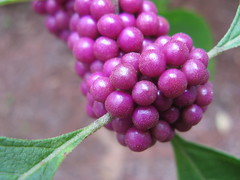
The American Beautyberry (callicarpa americana) lives up to its name: it is an outstanding shrub of the verbena family that loves northeast Florida so much it grows wild or cultivated with equal ease. Also known simply as beautyberry or French mulberry, this native plant is known for its characteristically eye-catching clusters of purple berries in the summer and fall months.

American Beautyberry responds well to transplanting and will propagate from seed or soft-wood cuttings in soil. Birds are known to eat the berries when there is not much else to eat in the colder months, but it is not their first choice for food. This is good thing so that the beautiful berries remain in the garden. Beautyberry leaves are a known food source for some caterpillars so they make a welcome addition to the a butterfly garden.

Currently in the Palm Coast, Ormond Beach, and St. Augustine area of Florida our beautyberry bushes are just getting their leaves back after a cold season. Soon we will have the tiny lavender flowers that will lead to the lovely magenta berries. Landscapers welcomes your questions regarding hardy species such as American beautyberry for Flagler, St. Johns, and Volusia landscape design - and of course we are also topmost experts when it comes to more sensitive and exotic varieties of plants.

🦚Article by Connie Helena, author of The Green Orchid ðŸ¦š

Flower of July: Crape or Crepe, This Myrtle Tree is Florida Friendly


Hello summer and beautiful, colorful crape myrtle trees! One of the first signs of warmer weather in these parts of northeastern Florida is the blossoming of our many crape myrtle trees that, being deciduous, may have died back over the winter and were trimmed and pruned to perfection by a landscaper.

Crape (or crepe - either spelling is fine) myrtle trees are fast growing and retain their blooms for what seems like forever, as long as 120 days to be exact. They come in gorgeous shades of white, purple, pink, and red. Lagerstroemia indica is a rewarding addition to your Florida landscape design.  It is very versatile and can be used in a variety of plantings.

Crape myrtles like a lot of water but they will tolerate dry soils also. They are affordable trees that come in endless choices of types and sizes. Although pruning the trees back is common practice, it is also possible to let them grow to their full size which can be quite large.  You cannot miss the crape myrtle trees in bloom all over North Florida this time of year.

Landscaping pros will gladly incorporate the lovely, hardy crape myrtle tree or shrub into your landscaping plan for your home in Ormond Beach, Daytona Beach, Palm Coast, and the surrounding areas of Florida.  We also design, install, and maintain luxury landscaping in St. Augustine.

Although the crape myrtle is native to India, it is still considered Florida Friendly.  It is drought tolerant and welcoming to pollinators such as bees and butterflies. To see more photographs of this beautiful tree, go to the National Arboretum Crapemyrtle Page.

Florida Friendly Plant: Lantana

Common lantana (lantana camara), also known as shrub verbena, is a lovely summer and fall flowering plant that tends to pop up in the natural landscape on occasion. In the tropical areas where lantana is native, it is evergreen but here in northeast Florida it will die back during frost only to rise again beautifully when spring comes. Lantana is a favorite among butterflies and the less rain the better as more flowers form with drought conditions. Lantana will grow in sun or part shade and will tolerate many different types of soil including poor ones.

If you are lucky enough to have one of the pink/orange lantana bushes grow naturally in your yard, you may like to keep it as part of your xeriscape design. Because of new state laws and views, Florida Friendly landscaping is enjoying a new prominence and lantana is a nice addition to this particular landscape style. In frost-free climates such as Hawaii, lantana is such a hardy grower that it is consider invasive.